
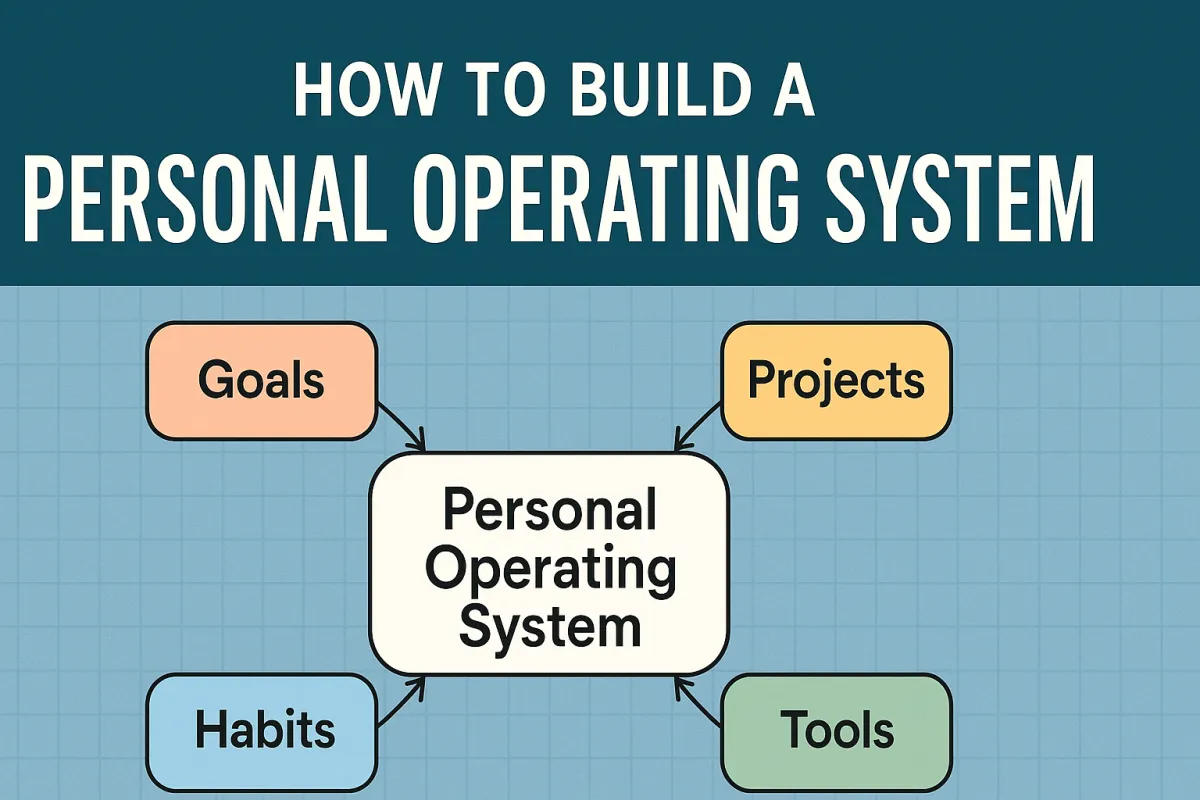
How to Build a Personal Operating System
Last Updated: November 19, 2025
TL;DR
A personal operating system is a simple, repeatable structure you follow every day to make better decisions, stay organized, reduce mental fatigue, and move toward your goals with clarity. You build one by defining your priorities, creating routines, using systems instead of motivation, and eliminating friction.
Introduction: You Do Not Need More Motivation, You Need a System
Most people blame inconsistency on a lack of motivation. They believe they would achieve more if they felt inspired, energized, or disciplined.
But motivation is inconsistent.
Systems are consistent.
The people who achieve the most are not the ones who work the hardest. They are the ones who create a personal operating system that removes confusion, reduces decision fatigue, and makes execution automatic.
A personal operating system is not complicated. Think of it as the rules you live by so you can operate with clarity instead of chaos.
This guide walks you through how to build a personal operating system that makes your life and business easier, not harder.
Let us begin.
1. Start With Your Core Priorities Instead of Random Goals
A personal operating system begins with clarity. You cannot build structure around confusion.
Start by defining your core priorities:
Health
Family
Business
Income
Learning
Creative work
Community
Identity
Your priorities shape your behaviors. Without clear priorities, your days become reactive instead of intentional.
Ask yourself:
What matters most right now
What am I building
What am I improving
What am I protecting
What am I eliminating
Your priorities determine the direction of your operating system.
2. Break Down Your Priorities Into Simple Daily Behaviors
A priority means nothing if it never becomes action.
Convert each priority into repeatable behaviors:
Health
Move daily
Drink water
Eat intentionally
Business
Produce daily
Follow up
Improve systems
Creativity
Write
Publish
Learn
These actions become non-negotiable components of your operating system.
Consistency becomes easier when behaviors are small, simple, and repeatable.
3. Build a Morning Routine That Sets Your Direction for the Day
Your morning routine is the starting point of your operating system. It determines whether your day begins with intention or randomness.
A strong morning routine includes:
Hydration
Movement
Planning
A moment of clarity or reflection
A small win that builds momentum
One priority task started early
Avoid routines that are so long you cannot maintain them. Simplicity leads to consistency.
The goal is not perfection.
The goal is direction.
4. Create a Daily Workflow That Reduces Decision Making
Decision fatigue slows you down. A personal operating system reduces the number of choices you make every day.
You need default rules such as:
What time you work
When you create
When you check messages
When you handle admin tasks
When you deep work
What tools you use
How you end the day
Defaults eliminate friction.
Less friction means more output.
Your workflow should help you act, not hesitate.
5. Use Templates and Checklists to Make Execution Effortless
A personal operating system relies heavily on templates and checklists because they reduce mental load.
Examples:
Content templates
Email templates
Daily checklists
Weekly reviews
Project outlines
Decision guidelines
Communication rules
Templates remove the emotional friction of starting from scratch.
Checklists remove the cognitive friction of remembering every step.
Systems protect you from inconsistency.
6. Build a Weekly Review Process to Keep the System on Track
Your operating system must evolve. A weekly review ensures nothing drifts off course.
During the review, ask:
What worked
What slowed me down
What repeated problems appeared
What tasks created friction
What steps were missing
What systems need improvement
Then adjust your routines and templates based on what you learned.
A personal operating system becomes stronger every week through review and refinement.
7. Use Environment Design to Reduce Friction and Increase Action
Your environment influences your behavior more than motivation does.
To build a strong operating system:
Remove distractions from your workspace
Keep tools and apps organized
Set up shortcuts for repetitive tasks
Make your workspace easy to begin working in
Place things where they prompt the right action
Design your surroundings to support your priorities
When your environment supports your goals, you do not need willpower to act.
Your environment should make the path of action easy.
8. Automate Everything That Does Not Require Human Judgment
Automation is a core part of any strong personal operating system.
Examples:
Calendar reminders
Auto saving documents
Task management systems
Automatic file organization
Auto generated reports
Email templates
Pre assigned workflows
Tools that run without manual effort
Every repetitive task you automate saves minutes every day and hours every week.
Automation reduces cognitive load and increases speed.
9. Reduce the Number of Tools and Create a Single Source of Truth
Chaos increases with tool overload.
A personal operating system requires simplicity:
One calendar
One task manager
One note system
One file structure
One workflow board
One place for goals
One reference hub
When information is scattered, confusion grows.
When information is centralized, speed increases.
Your personal operating system becomes powerful when everything has a place and the place never changes.
10. Create Performance Standards That Keep You Accountable
Your personal operating system needs measurable standards so you know whether you are operating correctly.
Examples:
One piece of content published daily
One hour of deep work
One follow up session
One health related action
One improvement to a system each week
Standards keep you consistent.
Consistency turns into progress.
Standards also make it easy to identify when the system is failing so you can recalibrate before losing momentum.
11. Use Identity to Anchor the System
A strong personal operating system connects directly to identity.
Identity drives behavior:
I am a person who produces daily
I am someone who honors my schedule
I am someone who manages time intentionally
I am a creator who shows up even when it is inconvenient
I am a leader who keeps promises to myself
When your identity aligns with your system, the system becomes natural instead of forced.
Identity based operating systems last longer because they reflect who you are becoming.
12. Remove Unnecessary Inputs That Distract Your Mind
You cannot operate efficiently if your brain is overloaded.
Reduce distraction by eliminating:
Excessive notifications
Unneeded social feeds
Random obligations
Useless subscriptions
Low value commitments
People who drain your focus
Projects that do not align with your priorities
Your mental bandwidth must be protected.
A personal operating system is only as strong as your focus.
Conclusion: A Personal Operating System Makes Life Easier, Not Harder
Success is not about motivation, willpower, or intensity.
Success is about the structure you follow every day.
A personal operating system helps you:
Eliminate friction
Increase speed
Reduce decision fatigue
Stay consistent
Improve clarity
Build momentum
Move toward your goals
Stay aligned with your identity
The more you refine your system, the more predictable your progress becomes.
Do not try to operate your life from memory.
Build a system that carries you forward.
A personal operating system will make you more productive, more confident, and more in control of your life than motivation ever will.
Mail
Facebook
LinkedIn
X
Pinterest
Reddit
Snapchat