
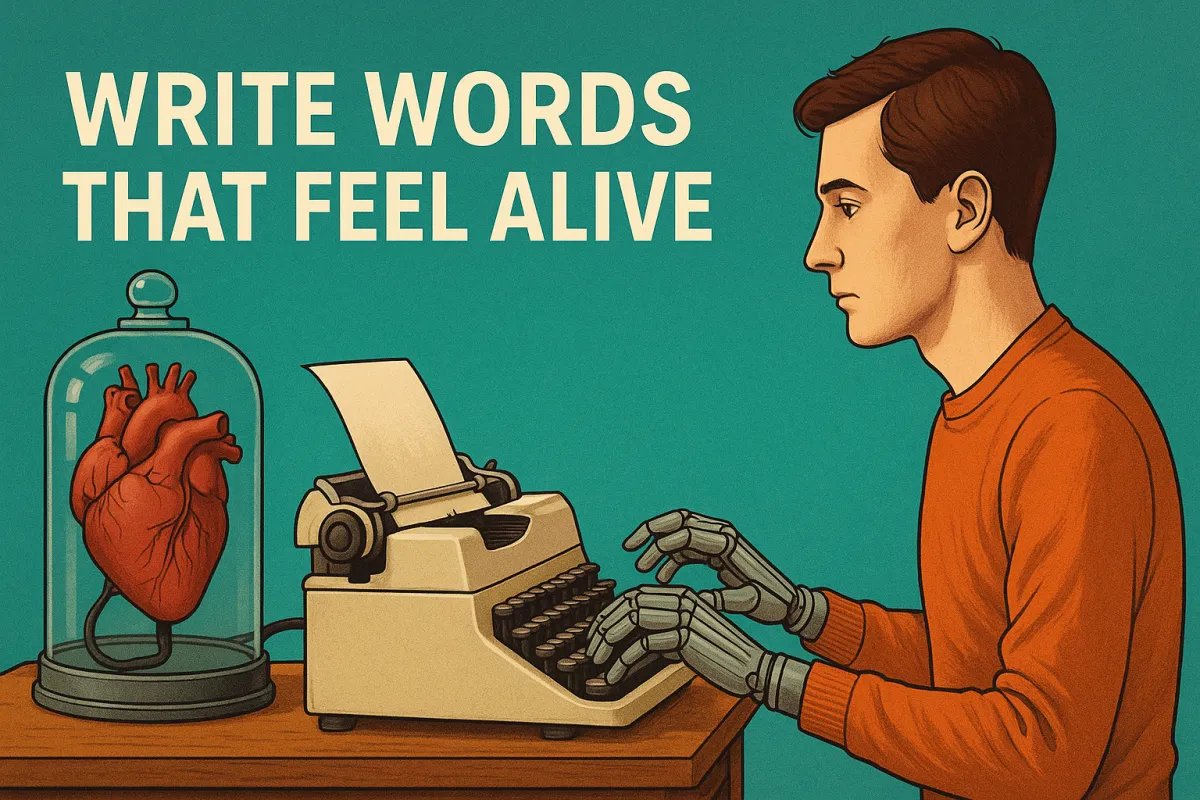
How to Write Sales Copy That Sounds Human
Last Updated: September 7, 2025
Quick Answer:
You write sales copy that sounds human by using conversational language, revealing real thought processes, eliminating corporate jargon, focusing on the reader’s emotions, removing filler words, speaking directly to one person, and structuring your message around clarity instead of hype. Human sounding copy is simple, honest, and specific.
Most Sales Copy Fails Because It Sounds Like a Robot, Not a Person
People do not tune out sales copy because they hate being sold to.
They tune it out because it feels unnatural.
The internet is full of:
Corporate language
Fake urgency
Overhyped claims
Generic promises
Robotic sentences
Buzzwords nobody uses in real life
This happens because most writers try to imitate what they think “marketing copy” should sound like.
Here is the truth:
Human sounding sales copy outperforms robotic copy every time.
Because humans trust people, not ads.
Your goal is not to sound like a marketer.
Your goal is to sound like a person who understands your reader deeply and explains the solution in a clear, natural voice.
This article shows you exactly how to do that.
1. Write to One Person, Not an Audience
Human sounding copy feels personal.
You cannot sound personal if you write to a crowd.
Most writers make this mistake:
“Many business owners struggle with…”
Better:
“You are probably tired of dealing with…”
The shift is simple:
Replace “you all” with “you.”
Replace “business owners” with “you.”
Replace “creators” with “you.”
Copy becomes human when it reads like a private conversation.
Imagine writing to one specific person:
Your ideal customer
A client you helped
Someone who DM’d you with a problem
Someone you personally know who fits your niche
When you write to one person, your tone becomes clear, focused, and authentic.
2. Remove Every Word You Would Never Say Out Loud
If you would not say it in a conversation, do not write it in your copy.
This means removing words like:
Therefore
Utilize
Moreover
Furthermore
Consequently
Synergy
Robust
Cutting edge
Leverage (unless used naturally)
Replace these with:
So
Use
Also
Because
That is why
Strong
Helpful
Useful
Simple words sound human.
Complex words sound robotic.
Your goal is not to impress with vocabulary.
Your goal is to connect with clarity.
3. Break Grammar Rules When It Makes the Copy Feel Real
Human speech is not perfect.
We:
Pause
Emphasize
Start sentences with “and” or “but”
Use short bursts
Break sentences for effect
Repeat words
Use rhythm
If your copy is too perfect, it feels unnatural.
Examples:
Robotic:
“Our program is designed to help entrepreneurs reach their goals more effectively.”
Human:
“You want to grow. You want it to feel easier. And you want proof that what you are doing is actually working.”
Humans speak in short sentences.
We punctuate our thoughts.
We show emotion through pace.
Do the same in your copy.
4. Use Real Emotion, Not Manufactured Hype
There is a difference between emotion and over selling.
Fake hype looks like:
“This is the most life changing program ever created!”
Human emotion looks like:
“You are tired of working hard and still feeling stuck. You are not crazy for wanting something easier. You just need the right system.”
Humans respond to:
Honesty
Relatability
Specificity
Shared experiences
Avoid exaggeration.
Aim for truth.
Truth sells better than hype.
5. Write Like You Talk, Not Like You Type
This is the most important rule.
Before writing, imagine you are:
Explaining your offer to a friend
Answering a question in a DM
Talking on a Zoom call
Advising someone at a coffee shop
Ask yourself:
“How would I say this out loud?”
Your tone should sound like:
Clear
Calm
Confident
Conversational
Helpful
Certain
Sales copy that sounds human is simply written speech.
6. Use Specific Examples Instead of Vague Claims
Humans trust specifics.
Robots use generalities.
For example:
Generic (robotic):
“You will grow your business faster than ever.”
Human (specific):
“You will get more customers without posting 20 times a week or working 18 hour days.”
Specifics feel believable because they tap into real experience.
Examples of specifics:
Time frames
Numbers
Scenarios
Behaviors
Pain points
Micro frustrations
Real conversations
The more specific you are, the more your copy feels grounded in reality.
7. Show Your Reader You Understand Their Internal Dialogue
Human sounding copy mirrors the thoughts someone is already having.
Examples:
“You probably feel like you are working harder than ever and getting nothing to show for it.”
“You are not confused because you are unskilled. You are confused because every expert says something different.”
“You keep telling yourself you will start tomorrow. Tomorrow has turned into next month.”
When readers feel understood, they trust you more.
You sound human because you are articulating what they are already thinking.
8. Use Short Sentences To Show Clarity and Confidence
Long sentences feel heavy.
Short sentences feel confident.
Compare:
Robotic:
“Our system is a comprehensive set of tools that empowers creators to reach new heights through effective processes and strategic implementation.”
Human:
“You want something that works. Something simple. Something you can do today. That is exactly what this system gives you.”
Short sentences:
Build rhythm
Add emotion
Increase clarity
Help the reader move quickly
If your copy feels heavy, shorten your sentences.
9. Use Story Fragments To Make the Copy Relatable
Stories do not need to be full narratives.
A story fragment is enough:
“I used to wake up every day frustrated because nothing was growing.”
“I remember staring at my screen thinking, Why does this feel so hard?”
“One client told me she almost quit before she found this system.”
Story fragments humanize your copy because they show lived experience.
Facts persuade.
Stories connect.
Good copy uses both.
10. Replace “We” With “I” Whenever Possible
People trust individuals more than companies.
If you run a personal brand, or even if you run a company but want your tone to be human, use “I” instead of “we.”
Examples:
“I built this because…”
“I tried everything and nothing worked until…”
“I wanted to create something that actually helps people.”
Using “I” makes your connection more personal.
Even large companies are shifting toward this because people want human connection.
11. Add Micro Moments of Honesty
Human sounding copy has moments that feel real and unexpected.
Examples:
“This might not be for you if you want a magic button.”
“You have probably bought similar things before. So have I.”
“I will be honest. You will need to put in some work.”
“Most marketers would never say this, but…”
Moments of honesty build trust instantly.
They lower the reader’s defenses.
They make you sound credible.
They make your copy feel genuine.
12. Let Your Reader Breathe. Use White Space.
Copy that is smashed into giant paragraphs feels overwhelming.
Use white space to create:
Rhythm
Emphasis
Clarity
Comfort
Flow
Readers scan. They do not read in blocks.
Break your copy like a human conversation:
Short lines
Pauses
Emphasized thoughts
The easier your copy is to read, the more human it feels.
Frequently Asked Questions
Can you write human sounding copy if you are not a great writer?
Yes. Human sounding copy is simple. Anyone can do it.
Does human copy still convert?
It converts better because people trust it more.
Do I need to follow traditional grammar rules?
No. Prioritize clarity over grammar.
What if my niche is technical?
You can still write clearly. Simplicity is universal.
The Bottom Line
Sales copy that sounds human is not about tricks or formulas.
It is about communication.
Human sounding copy:
Speaks directly to one person
Uses natural language
Removes jargon
Mirrors real thoughts
Uses specifics
Builds trust
Shows emotion
Sounds like a conversation
Robotic copy tries to impress.
Human copy tries to connect.
Connection is what sells.
Key Takeaways
Write like you talk
Use simple words
Keep sentences short
Use specifics and stories
Show real emotion and understanding
Break the rules when it feels natural
Avoid hype
Add honesty
Speak directly to one person
What To Do Next
Pick one offer.
Write the way you would explain it to a friend.
Remove every sentence that sounds robotic.
Add story fragments and real emotion.
Share your thought process.
Then publish.
This is how you build trust and sell more with human sounding copy.
Mail
Facebook
LinkedIn
X
Pinterest
Reddit
Snapchat