
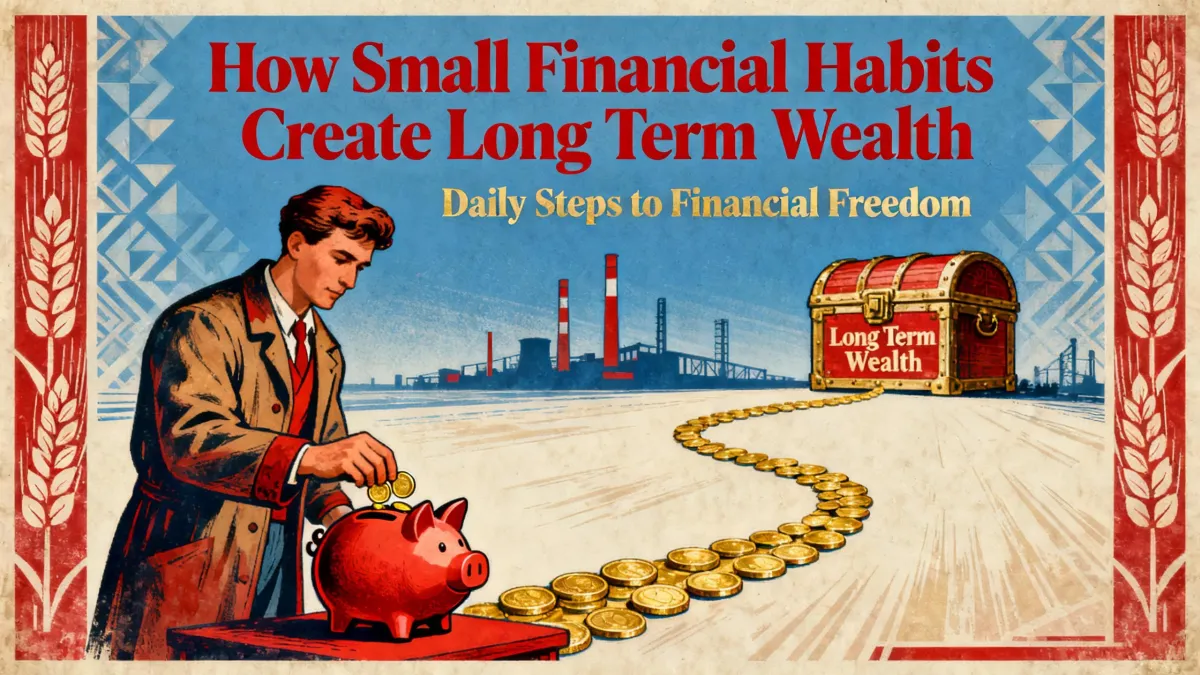
How Small Financial Habits Create Long Term Wealth
Last Updated: December 21, 2025
Quick Answer
Small financial habits create long term wealth because they compound over time. When you automate savings, invest consistently, control spending, and repeat simple money actions every month, your financial momentum grows quietly until it becomes significant. Wealth is built through small steps, not dramatic moves.
Most people believe wealth comes from big events. They believe it takes massive income, high risk decisions, or life changing opportunities. They imagine a sudden breakthrough or a big windfall. The truth is far simpler. Wealth does not come from dramatic actions. Wealth comes from small habits repeated consistently.
The reason most people never build wealth is not because they are incapable. It is because they underestimate the power of small actions done daily. They look for something big instead of building something steady. They chase the fantasy of overnight success instead of the reality of long term momentum.
This article explains why small financial habits matter, how they compound, and which habits create real long term wealth.
Why People Overlook Small Financial Habits
People underestimate small habits for predictable reasons.
1. Small actions feel insignificant
Setting aside ten dollars does not feel like it will change your life, but the habit behind it will.
2. People want fast results
Wealth grows slowly at first. Impatience makes people quit before the rewards arrive.
3. Big financial goals feel overwhelming
When the goal looks too large, people freeze instead of starting small.
4. They believe they need perfect discipline
Wealth does not require perfection. It requires consistency.
5. They underestimate how much their behavior shapes their outcome
Your habits determine your financial identity. Your financial identity determines your wealth.
Once you understand the power of small habits, you realize that wealth is not mysterious. Wealth is designed.
The Science of Why Small Habits Build Wealth
Small habits work because of two powerful forces:
Compounding
Identity shaping
These forces create long term financial change.
Compounding: The Engine Behind Wealth
Compounding is simple. When small actions repeat, they multiply. They create exponential growth over time.
Examples of compounding effects:
• Ten dollars saved weekly becomes over five hundred dollars in a year
• Investing a small amount monthly can become thousands over time
• Lowering one recurring expense frees up money to invest more
• Improving your skills by one percent daily increases your earning power
Compounding is not impressive in the beginning. But in the long run, it is unstoppable.
Identity Shaping: The Hidden Wealth Builder
Every small habit sends a message to your brain about the type of person you are.
• When you save regularly, you become someone who saves
• When you invest consistently, you become someone who grows their money
• When you manage spending, you become someone who controls their finances
• When you learn new skills, you become someone who increases their earning potential
Identity shapes behavior. Behavior shapes wealth.
The Five Small Habits That Create Long Term Wealth
There are five foundational habits that build wealth predictably. They are simple, sustainable, and easy to begin. Yet most people ignore them because they seem too small to matter.
These habits work because they build momentum without requiring major lifestyle changes.
Habit One: Automate Your Savings
Automation is one of the easiest ways to build wealth. It removes emotion, decision fatigue, and inconsistency.
When you automate your savings, you:
• Remove the temptation to spend
• Build financial cushion
• Develop discipline without effort
• Start compounding early
Even a small automated amount builds momentum.
Examples:
• Ten percent of your income automatically sent to savings
• A set amount moved every payday
• Automatic transfers scheduled weekly
The key is consistency. Automation turns saving into a lifestyle, not a struggle.
Habit Two: Invest a Small Amount Every Month
Most people delay investing because they think they need thousands to start. Wealthy people know the opposite is true. You invest early, even if the amount is small.
Investing monthly builds:
• Long term growth
• Consistent compounding
• Confidence in your wealth building strategy
• Emotional resilience during market swings
Examples of small investment habits:
• Fifty dollars monthly into an index fund
• Round ups from purchases invested automatically
• Simple recurring deposits into a retirement account
The amount matters less than the repetition.
Habit Three: Track Your Spending Weekly
You do not need to monitor every penny, but you do need awareness. Wealth begins with clarity.
Weekly spending reviews help you:
• Catch financial leaks
• Identify emotional spending
• See patterns clearly
• Make adjustments before problems grow
This habit should take ten minutes. Look at your account. Review your last week. Identify anything that surprised you. Awareness creates control.
Habit Four: Increase Your Income Skill by Skill
Wealth is not only about saving. It is also about earning. Small skill improvements create large future income jumps.
Examples of income building habits:
• Ten minutes daily learning a valuable skill
• Reading one book per month on business or money
• Practicing communication, writing, or leadership
• Building a side project consistently
• Improving a high income skill such as sales or marketing
Each skill unlocks new opportunities. Over years, this becomes financial leverage.
Habit Five: Reduce One Recurring Cost Every Quarter
Small reductions create large long term gains. When you reduce recurring expenses, you free money for savings, investing, or debt reduction.
Examples:
• Canceling a subscription you do not use
• Lowering an insurance bill
• Negotiating a service cost
• Switching to a cheaper alternative
A ten dollar reduction monthly becomes one hundred twenty dollars yearly. Over decades, this habit compounds into thousands.
Reducing recurring costs is one of the fastest ways to increase your financial stability.
How Small Habits Grow Into Big Wealth
Small habits combine to create a powerful long term effect. Here is how the compounding process unfolds.
Stage One: Improvement
At first, the changes feel small. You save a little. You invest a little. You review your spending. You increase a skill. Nothing feels dramatic. This is normal.
Stage Two: Momentum
After a few months, you begin to notice patterns.
• Your savings account is growing
• Your investments are compounding
• Your spending becomes more intentional
• Your confidence increases
• Your stress decreases
Momentum creates motivation. Motivation increases consistency.
Stage Three: Transformation
Over years, everything changes.
• You have a real financial cushion
• Your investments have grown significantly
• Your skills increase your earning power
• Your habits strengthen your identity
• You feel stable, prepared, and confident
Wealth is a transformation story. The small habits write the chapters.
Why Small Habits Are Easier to Sustain Than Big Changes
People often attempt big financial changes. They try strict budgets, extreme saving, or sudden investing strategies. These intense efforts rarely last.
Small habits last because they:
• Fit naturally into daily life
• Do not require massive discipline
• Feel achievable
• Provide quick positive feedback
• Create identity based motivation
Big changes rely on willpower.
Small habits rely on systems.
Systems always win.
A Beginner Friendly Plan for Building Wealth Through Small Habits
Here is a simple plan to begin using small habits today.
Step One: Choose one saving habit
Examples:
• Save twenty dollars every payday
• Save a set percentage of income
• Save round ups from purchases
Start with something simple.
Step Two: Choose one investing habit
Examples:
• Invest one small amount monthly
• Begin a retirement account
• Use an automated investing app
The goal is not size. The goal is frequency.
Step Three: Add one clarity habit
Examples:
• Weekly spending review
• Monthly financial check in
• Read one money book every two months
Clarity prevents drift.
Step Four: Add one income habit
Examples:
• Practice a high value skill daily
• Learn a new digital skill weekly
• Improve your communication
• Start a small side project
Investing in yourself creates the highest return.
Step Five: Remove one recurring expense
Choose something small, reduce it, and redirect the savings. Over time, these decisions add up.
This five step plan is simple, achievable, and realistic for beginners. It also builds the foundation for long term wealth creation.
A Seven Point Wealth Building Checklist
Use this checklist weekly or monthly.
1. Am I saving consistently
2. Am I investing monthly
3. Am I tracking spending
4. Am I improving my skills
5. Am I reducing recurring costs
6. Am I avoiding emotional spending
7. Am I gaining financial clarity
If the answer is yes to most of these, your wealth is growing.
Conclusion
Long term wealth is not built through luck, sudden windfalls, or complicated financial strategies. It is built through small decisions repeated for years. Wealthy people do not think in terms of big moments. They think in terms of daily habits that support their future.
Small financial habits are powerful because they shape identity, create momentum, and build compounding results. They make wealth accessible to anyone willing to start small and stay consistent.
You do not need perfection. You need direction. You need habits that support your future instead of habits that drain it. When you build these habits, everything begins to change. Slowly at first, then dramatically.
The path to wealth is simple. One small habit at a time.
Mail
Facebook
LinkedIn
X
Pinterest
Reddit
Snapchat