
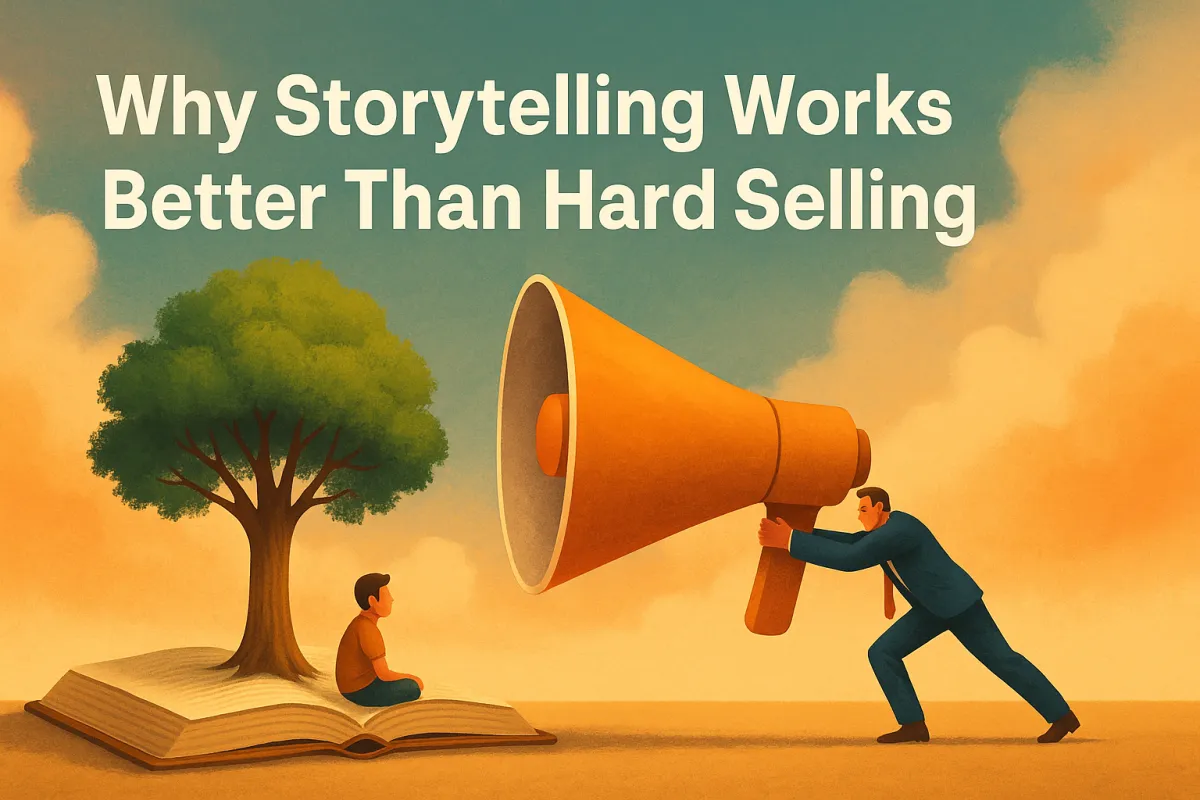
Why Storytelling Works Better Than Hard Selling
Last Updated: November 3, 2025
TL;DR
Storytelling works better than hard selling because stories build trust, lower resistance, increase emotional connection, and help people understand the value of your offer without feeling pressured. People buy when they feel seen, understood, and guided. Stories create that feeling naturally.
Introduction: Why Hard Selling Pushes People Away
Most entrepreneurs try to sell by forcing logic.
Here are the features.
Here are the benefits.
Here is the deadline.
Here is the price.
Here is why you should care.
But the harder you push, the more people resist. Hard selling triggers defensiveness. It makes prospects feel pressured. It activates fear and skepticism.
Storytelling does the opposite.
Stories lower the guard.
Stories create connection.
Stories deepen attention.
Stories make the sales experience feel natural instead of forced.
This guide explains why storytelling outperforms hard selling and how to use narrative to convert more buyers with less pressure and less effort.
Let us begin.
1. Stories Bypass the Brain’s Resistance to Sales Pressure
The human brain is wired to resist persuasion attempts. When people sense they are being sold to, they automatically become defensive.
They start thinking:
Is this a trick
Is this really worth it
What are they hiding
Why are they pushing so hard
Hard selling triggers this internal resistance quickly.
Stories bypass that resistance because they do not feel like persuasion. They feel like entertainment, explanation, or shared experience. When the brain hears a story, it relaxes. It stops looking for traps. It becomes receptive.
Storytelling reduces resistance before the sales logic begins.
2. Stories Trigger Emotion, and Emotion Drives Decisions
People like to believe they make logical decisions, but the truth is simple.
Emotion drives action.
Logic justifies it.
Stories create emotional resonance by showing:
A relatable struggle
A personal turning point
A meaningful lesson
A transformation
When someone feels the emotion in your story, they trust the message more. Emotion makes the message stick. Emotion makes the decision easier.
Hard selling tries to convince the mind.
Storytelling speaks to the heart.
When the heart agrees, the mind follows.
3. Stories Make You More Human and More Trustworthy
People do not buy from faceless brands. People buy from people they like and trust.
Storytelling reveals:
Who you are
What you believe
What you have learned
What mistakes you have made
Why you created your offer
This transparency builds trust. Trust increases conversions.
Hard selling hides humanity. It focuses on persuasion. Storytelling builds connection. It focuses on sharing.
Connection sells more than pressure ever will.
4. Stories Explain Value Better Than Bullet Points
Hard selling relies on bullet points and lists. But information alone does not create understanding.
Stories give context.
Stories show how the idea works.
Stories demonstrate the transformation.
Stories help the audience imagine themselves succeeding.
When you share:
A personal breakthrough
A client win
A moment that changed everything
A discovery from your journey
The value becomes easy to see. The buyer understands what the offer can do for them.
Humans learn through stories.
Stories make the value feel real.
5. Stories Shift Beliefs Without Argument
To buy anything, a person must adopt specific beliefs:
The problem matters
The solution works
You are the right guide
The process makes sense
The timing is right
Hard selling tries to force these beliefs.
Storytelling guides the buyer into discovering them naturally.
Example:
Hard sell: “You need this because it will help you save more time.”
Story: “I used to spend hours each day doing tasks manually. Then I changed one thing and cut my workload in half.”
The second message is softer, clearer, and more effective.
Stories shift beliefs without confrontation.
6. Stories Create Memorability, Which Makes the Message Spread
People forget facts.
People forget pitches.
People forget frameworks.
But people remember stories.
A single story can communicate:
Your values
Your lesson
Your experience
Your proof
Your offer’s meaning
Shareable stories increase:
Brand recall
Word of mouth
Organic reach
Audience loyalty
Long term awareness
Hard selling ends when the pitch ends.
Storytelling continues working even after the reader leaves.
7. Stories Demonstrate Proof Without Needing to Brag
Proof is essential in sales. Hard selling often communicates proof by listing numbers or achievements, but that can feel boastful.
Stories communicate proof naturally.
Client stories show:
Real problems
Real progress
Real transformation
Real emotion
Personal stories show:
Your experience
Your growth
Your expertise
Your authenticity
Stories allow you to demonstrate credibility without sounding arrogant.
People trust stories more than statistics because stories feel real.
8. Stories Build Psychological Safety for the Buyer
Hard selling often creates pressure. Pressure creates fear. Fear stops decisions.
Storytelling creates safety.
When you tell a story, the reader sees a journey. They see ups and downs. They see imperfections. They see possibilities.
That makes them feel:
Safe
Seen
Understood
Capable
Hopeful
Safety leads to openness. Openness leads to action.
If buyers feel safe, they move forward.
9. Stories Turn Your Offer Into the Natural Conclusion
A well told story has a beginning, a struggle, a turning point, and a resolution.
Your offer is the resolution.
This makes the pitch feel like:
The next step
The logical solution
The natural continuation
Example:
Story: “I was stuck, overwhelmed, and frustrated. Then I created a simple system that fixed everything.”
Offer: “That system is exactly what we teach inside the program.”
The offer feels inevitable.
Hard selling tries to force the offer forward.
Storytelling pulls the buyer toward the offer naturally.
10. Stories Increase Attention, and Attention Increases Conversions
The biggest challenge in sales is not competition. It is attention.
People scroll fast. People skip ads. People ignore pitches.
But people pause for stories.
Stories trigger curiosity. Curiosity slows the scroll. Once attention is captured, the message can land.
Hard selling fights for attention.
Storytelling earns attention.
Attention is the gatekeeper for conversion.
Storytelling is the gatekeeper for attention.
11. Stories Make Your Brand Feel Bigger Than a Transaction
A business built on hard selling feels transactional.
A business built on storytelling feels meaningful.
Meaning creates:
Loyalty
Connection
Community
Repeat purchases
High retention
Stories build a relationship with your audience, not just a one time sale.
When people feel connected to your story, they stay longer, support you more, and trust your guidance.
Hard selling wins a sale.
Storytelling wins a customer.
Conclusion: Storytelling Works Better Because It Mirrors How Humans Experience Life
People understand the world through stories. They make sense of their experiences through stories. They remember lessons through stories.
Sales is no different.
When you use storytelling in your content, emails, videos, and sales pages, you:
Lower resistance
Increase emotion
Build trust
Improve clarity
Strengthen beliefs
Demonstrate proof
Capture attention
Create connection
Provide value
Guide decisions
Hard selling demands action.
Storytelling inspires it.
If you want higher conversions, deeper relationships, and a brand people talk about, choose storytelling as your primary sales tool.
It works because it aligns with human nature.
Mail
Facebook
LinkedIn
X
Pinterest
Reddit
Snapchat